Saturday, August 23, 2014

What Lies Beneath (1 of 3): Appearances vs. Appreciation

So for anyone who doesn’t know, I made a bet with one of my science classes one year that if 70% of the students in the class scored a 70% or better on their end-of-the-year test, then I would:
  1. grow out my hair for the rest of the school year (which would be something like 5-6 weeks and a big deal for me since I tend to buzz it almost every other week), and
  2. dye it a color of their choice during the last week of school.
Long-story-short, they missed the percentage by one person, but I went ahead and did it anyway; purple won the vote by a landslide, and this is the shade I chose:


The icing on the cake was that one of the students suggested that I grow my facial hair out, too, so I did; I didn’t shave for over a month (the longest ever for me by far).

On the night after the last day of school, my hair had been dyed for about a week. Suddenly, no longer being bound by my agreement with my students, the prospect of having the freedom to cut my hair was upon me.

To be honest, I enjoyed it.

No, not the fifty billion times I’ve been asked, “Why is your hair blue?” (Unfortunately, it came out more of an indigo color.):


No, not that. Rather, it’s the act of having done something completely different with my (otherwise) unassuming appearance.

I know; I’m boring. Well, at least at first glance...

But one of the things that I like about my plain manner of dress is precisely that it’s not outwardly appealing. I mean, I’d be more likely to blend in with the crowd as opposed to stand out – that is, unless my freshly shaved head happens to catch someone’s eye. (Bald is beautiful! Haha, just kidding.)

And I like it that way.

First, it’s low maintenance. Throwing on jeans, a t-shirt, and sneakers – without having to worry about my hair – is incredibly pragmatic. The only thing more utilitarian would be to pull an Einstein and wear the same clothes every day (or at least identical sets of the same clothes lol).

Second, it’s plain. The fact that my appearance doesn’t really stand out allows what’s truly important about me to shine through: my heart, my mind, my personality, and my character. You know, all those intangible qualities that you can’t measure with a dollar sign because, like the MasterCard commercials reiterate all the time, they’re “priceless”:

Don’t be concerned about the outward beauty of fancy hairstyles, expensive jewelry, or beautiful clothes. You should clothe yourselves instead with the beauty that comes from within... which is so precious to God. (1 Peter 3:3-4)

The above verse deals with jewelry and the outward appearances regarding styled hair, jewelry, and clothes, but it doesn’t say that those things, in-and-of-themselves, are wrong. It just means that those things won’t be good for winning the hearts of others (see 1 Peter 3:1).

CONNECTION vs. SHALLOWNESS, and APPRECIATION vs. DISMISSAL

Being in a school and working with kids also gives me an outsider’s perspective on how we treat each other when we’re younger – and, for a large part, this is based heavily on appearance.

Quick side note: some kids don’t grow out of this as they “grow up,” so this can go for adults as well:


Alright, I’ll just go ahead and put it out there:

Some kids are so unbelievably shallow that it’s disgusting.

I thought about saying “appalling” instead of “disgusting,” but I’d rather not mince words.

Don’t get me wrong, this doesn’t go for all of them, because there are a lot great kids, too.

However, some don’t really care about anything beneath the surface, and your value in their eyes is largely determined by brand-name shirts and shoes, hemp necklaces, hats with stickers, mp3 players, cell phones, and how very much like them you happen to be. This occurs across socio-economic, gender, and racical lines.

Part of me wonders if it’s because they don’t have anything better to do...


But even the kids who are good fall into the “conformity trap” sometimes:


One of the things that I’ve realized – and, to be honest, it took some adults like this for me to realize it – is that people who are shallow enjoy life less.

Let me explain.

For the people who judge – and dismiss – each other based mainly on the exterior (or the trivial), they never get a chance to know someone for who they really are.

Okay, so someone doesn’t wear a particular brand of clothing, or they don’t wear it a certain way. Really, though, that’s “small potatoes” – or, more accurately, onions – because most people have multiple “layers” that they gradually unfold and let others into. As the depth of the friendship increases, so does the strength of the connection between the hearts of those involved, and the only way to discover the treasure of others’ hearts is to give it a shot and let them in:


Let me say something real quick here: Never, never, never underestimate the power of enjoying the “little things” with someone.

Those little things that, in your eyes, don’t really mean a whole lot, may be just enough for someone else to build a bridge between the two of you over which they feel comfortable enough to cross and open up to you:

Ken used to be the IT guy at the school where I teach. When he would come by to work on my computer, I would make a point to talk to him instead of doing something else while waiting for him to finish.
One day he came up to me and asked where I lived; it turns out that he needed a ride home. My commute is about 40 minutes, so it’s not a short distance, which means that providing a ride home for him would be a significant commitment.
Did I mention that he said he wasn’t leaving until 5pm? I had to be at work around 7, so that made it a 10-hour day for me.
I’d also be willing to bet that I was the first person he asked simply because I was intentional about making a connection with him.

Now, I’m not sharing the story to brag; in fact, I don’t really want to share it because I don’t want to seem like I’m toting how great I am (I’m not).

I’m sharing this because it’s a great example of what it looks like for someone to feel comfortable enough with you to “cross the bridge” and be vulnerable enough to ask for help.

ENJOYMENT

But if you don’t appreciate people for who they really are, it prevents you from enjoying all (or even some) that they may have to offer. And even if they don’t offer to unburden the depths of their soul to you, lots will still offer more than only the surface-layer stuff when they feel truly accepted and loved.

There’s nothing quite like having people who just get you in your life, who appreciate you for being you:


If you want a more grown-up version of this, just look at the theme song from Cheers:


Sometimes you want to go
Where everybody knows your name
And they’re always glad you came (i.e., they appreciate you being there)
You wanna be where you can see
Our troubles are all the same
You want to be where everybody knows your name

In other words, people enjoy being valued for who they are, and they’ll naturally gravitate toward a person/group where they feel the most acceptance. I mean, why would you stay where you’re tolerated when you can go to where you’re celebrated?

So when I realized this about the adults I was hanging out with, instead of judging them for their unaccepting disposition (which, I will admit, not judging others is a work in progress for me), I felt sorry for them. Especially because they won’t be able to enjoy the full uniqueness of others because they see peculiarities as quirks/blemishes instead of the “good stuff” that makes each and every one of us unique:


I mean, even people who have the exact same personality are completely unique. I can say this for certain because I’ve met several sets of what I refer to as “personality twins” who have practically identical mannerisms, speech patterns, etc.:

  • My high school psychology teacher was most certainly a character, and he was extraordinarily loved by his students because of it. However, the extroverted timeshare salesman who strongly reminded me of him just wasn’t quite the same because he was unique in his own right.
  • The guy from a church I used to go to still had a separate identity for all the life experiences and quirks that made him him, even though he had the same personality and laugh as one of my college roommates who commissioned into the military.
  • And the parent of a student who instantly reminded me of my brother-in-law in how he spoke and interacted with others, although similar, was, at the same time, completely different from him.
As a friend of mine – and this is someone that I used to tease all the time for being “high maintenance” – once said:

“Yes, but to love me is to love everything about me – even those things you see as my little quirks.”

To quote one of the girls in the youth group at my church:

Why do we try so hard to be perfect when the people who think we are perfect love us because we aren’t perfect? (Thanks, Monica!)

“People call these things ‘imperfections,’ but they’re not. Oh, that’s the good stuff.”

SO WHERE AM I GOING WITH ALL THIS?

When I thought about how I was now free to cut my hair as I wished, a thought – you could say it was a temptation – crossed my mind. It was something along the lines of...

If I cut my purple hair, then what will I have that will make me unique?

And for a second, I considered keeping it:


Don’t’ get me wrong, because cutting it was always a sure thing; it was just a matter of time (though a little longer than 0.68 seconds lol). This is mainly because I like how not having any hair feels and I wouldn’t (regularly) go to the trouble of coloring it like that.

For one thing, it’s a refusal to live by the appearances-are-the-most-important-thing mentality that so many people choose to embrace. And in that sense, I’ll “drive” myself, thank-you-very-much:


Esse Quam Videri, as the saying goes:

To be, rather than to appear.

But no, not just that. Anything that you make room for in your life has the potential to make a place for itself in your heart.

I remember a few years ago when, ironically, I had grown my hair out and actually maintained it at a length where I had to go get the first haircut I’d had in over a decade in order to keep it long enough to style.

During spring break, I went to visit my alma mater and scheduled a time to meet with the chaplain who had mentored me during college. During our conversation, he spontaneously placed his hands on my head to pray for me.

You know what the first thing that ran through my mind was?

“No, he didn’t just put his hands on my hair!”

And I knew right then that it had to go.

As Henry David Thoreau said,

Men have become 'tools' of their tools.

Or, to put it another way, “The things you ‘own’ end up ‘owning’ you”:


Don’t get me wrong: I’ll be the first to admit that I look better with hair – especially if it’s spiked a bit. However, I know that the true “gold” of me lies beneath the surface, not from whatever appearance I may or may not have at the moment, and this simply forces those around me to look deeper for what is truly important.

Which reminds me of a conversation I had with a cashier at Target:

I was standing in line behind a woman who was talking to the cashier while having her items rung up. During the conversation, the cashier mentioned that she had bought a pair of jeans that cost $135, and would spend almost $80 on only a few items of makeup.

Trying to speak something positive to her heart, I commented that “real beauty is on the inside,” which she (unfortunately) dismissed. She essentially said that, because she’s “anti-social,” she must present an outer beauty, “otherwise how will anyone know that I’m beautiful?”

You see, she wasn’t secure in the beauty that was in her heart, and so she felt compelled to present her “made up” outward beauty as a substitute.


It wasn’t enough for her to be beautiful simply for the sake of being beautiful as God created her; she felt compelled to go looking for validation of her (outer/false) beauty from others.

Politicians know that lots of people judge based on looks, which is why they focus so heavily on their appearance:


That saying, “Don’t judge a book by its cover”? That’s because lots of people do judge books (and others) based primarily on their covers/appearance.

Am I saying it’s wrong to be beautiful/handsome on the outside? Absolutely not.

Is it acceptable to have a sharp manner of dress?

Absolutely.

Just don’t become attached to it:


It's when those ravishing good looks (or style of clothing) are used as a substitute for who you were originally created to be, then they become false because they are not the truest thing about you – but more on that in Part 2...

Monday, August 4, 2014

A Different Perspective on the Gospel

Imagine a man whose brother has kidnapped and killed his wife on their honeymoon. He can rescue and resurrect his wife, but only if he lays his own life down at his brother’s murderous hands. And as much as he wants his brother to repent, he also knows that, by laying down his life, he not only saves his wife, but secures the means by which his brother will be judged.

Now imagine that, once his wife comes back to life, she no longer wants him. She would rather be with her kidnapper, the worst case of Stockholm Syndrome you ever came across — to the point that it wasn’t just his brother’s desire that he died, but hers as well.

Imagine his heartbreak for the wife who no longer wants him.

Imagine the heartbreak because of the brother who betrayed him by kidnapping & murdering his wife.

Imagine the fierce intention he would exhibit in pursuing them to rescue her, knowing he could bring her back and turn her heart towards him again.

Jesus is the husband.
Satan is represented by the brother.
We are the wife.

Satan is not equal with God, but he was given a place closer to Him than any other created being — and then betrayed Him, and turned us against Him as well.

We can turn back to our original Lover, but only if we allow Him into our hearts to release our focus from this world to Him.

If we choose not to, not only do we pass up the greatest source of Love in existence — one that would readily lay down His life for us — but we also secure ourselves a place with the “brother” at the coming judgment for our betrayal.

"For my people have committed two evils: (1) they have forsaken me, the Fountain of Living Waters, and (2) they have carved out cisterns; broken cisterns, that can hold no water." (Jeremiah 2:13)

You may not have knowingly chosen against or betrayed God, but ignorance does not not excuse your choices.

Now that you know, what will you do with that knowledge?

Wednesday, May 7, 2014

Tooth Fairy


You may smile at me,
but behind those lips are teeth bared,
a wolf in sheep’s clothing
waiting to sink its canines
into my flesh.

Don’t think for one second
that your demeanor —
climate-controlled to emptiness along
with your “great morning” greetings —
disguises your forked tongue.

I see who you are beneath the surface
despite that Optimist’s Creed
and those clichéd scriptures
sitting on your office bookshelves:
you’re a ladder-climber.

Someone who will step on toes
and crush heads with (high) heels
in order to (circum)navigate past that
imaginary glass ceiling
hanging over your head.

That mirrored glass ceiling haunts you
like a wraith, revealing your true colors;
a black cloud that’s waiting to burst and
reign a torrential downpour of broken dreams
from those that you’ve shattered
along your yellow-brick’d road,

A second-rate masonry job with
chipped stones,
like teeth with cigarette stains
that “cover up” the cancer in your lungs,
betrayed by halitosis and hacking coughs,
but still eating away at the very breath of life
you could steward for the good of others
if you would but embrace the person
you claim to be.

And though it may be a thorn in my flesh
to have you dig your spurs in my flank
as you ride me into the ground
like a sadistic rodeo clown,
I will show you compassion because,
though it’s a weakness my enemies do not share…

…it’s what separates me from them
and makes me my Father’s son.

Saturday, November 16, 2013

Divided: An Open Letter to the Disaffected Youth of the Church

I hope this finds you well.

I don’t know where you are in your walk with God, but I hope that this can help, regardless of whatever “chair” you may be in.

* I put “chair” in quotes as if to use it loosely or sarcastically; to (attempt to) quantify the spiritual life as only fitting in 3 stages is to think analytically, not poetically (more on that later).

When I became a Christian, there was a profound change in my heart, and one of the things that I set out to do was to be eternally available to anyone who needed my help for any reason.

Basically, I set out to be the nicest guy someone could meet.

But that’s not what Jesus is about.

I mean, he came to send swords, for crying out loud (Matthew 10:34).

And he set out to accomplish much more than that in his time here on Earth. He came to fulfill the law and restore what was lost (Matthew 5:17, Luke 19:10).

What a lot of people don’t understand, however, is that the “fulfilling of the law” is not accomplished in following rules, but inside of your heart.

When Jesus stepped on the scene, the Pharisees – the religious leaders – were teaching people left and right that in order to accomplish one’s salvation – that the whole point of their religion – was to do these things and not do those things.

Pathetic.

Jesus comes and, in the Sermon on the Mount, lays out the profound depth of the intent of the law:
  • It’s not just committing adultery if you sleep with someone, but looking at them with lust (Matthew 5:27-28).
  • Killing is not just taking a life, but hatred without cause (Matthew 5:21-22).
  • “Loving your neighbor” is not just those you get along with, but even those who hate your guts (Matthew 5:43-44).
It’s so easy to get sucked in to rule-keeping and following a list of do’s and don’ts.

This is what almost happened to me as a young believer in college.

Then something happened that changed my life just as much – if not more – than when I became a Christian, and that had to do with how I viewed my faith.

In the summer of 2003, I read a book that irreversibly impacted me. That book was Wild at Heart by John Eldredge.

What I realized is that a lot of what the church tries to do is get guys to do the right thing.

And it bores us to death.

Don’t get me wrong, because doing the right thing is good.

But doing the right thing only because it’s the right thing goes back to the rule-keeping that Jesus came to free us from.

Religious people are especially bad at missing this distinction, because Christianity is So. Much. More. than a list of do’s and don’ts.

I mean, for crying out loud, we have the opportunity to know the Man who created the world and everything in it – Jesus!

But alas, there is another terrible misconception regarding our “relationship” with him.

Most people focus on the aspect of Jesus being “Lord.”

Person pet peeve: I hate when people refer to the Father or Son as “the Lord.” It just seems so impersonal...

No offense if you do this lol.

But anyway, although this is true, at the same time, it’s not.

This is the difference between the poetic and the analytical.

For hundreds of years, cultures knew the value of the poetic and spoke in terms that the heart could understand, but this has been lost in the last few hundred years with the Enlightenment and the Modern Era, with their emphasis on knowledge, pragmatism, and seeing religion as a functional means to enact change instead of a path to lead people to their Creator.

Let me explain:

The analytica deals in terms of breaking things down to get a good look at their parts – looking at the tress, but not seeing the forest. You could say that they miss the big picture because of this...

When asked what a kiss entails, someone dealing in the analytical would say that, technically, it’s two sets of the fleshy parts forming the margins of the mouth pressing together for a duration of time, with the possible exchange of digestive fluid and the touching of the tasting organs.

Now, technically, that’s correct.

But it strips the life out of the thing it just analyzed.

Solomon – who was the wisest man who ever lived (1 Kings 3:12) – put it much better when he described the woman he was in love with and what it was like to kiss her:

“Your lips are as sweet as nectar, my bride;
    Milk and honey are under your tongue.”
(Song 4:11)

So much of the church deals in the analytical that we have forgotten how to speak to what really moves us: the poetic language of the heart.

Jesus does this with those he relates to:

As the disciples walking down the Emmaus road told of their experience with him, their hearts burned within them as he expounded on the prophecies about himself.

Freaking prophecies!

Academic information can be dry to say the least; I had to read a purely academic book during my senior year in college, and I trudged my way through another one just after college.

But when Jesus spoke about prophecies with these 2 men, their hearts burned because of the One who spoke to them – even though he was veiled and they didn’t recognize who he truly was (Luke 24:15, 27, 30-32).

This is because the words of the true Jesus are empowered by “spirit and life” (John 6:63, 68).

You could almost extend that and say that anytime your heart burns when someone is speaking to you (or as you are reading something), that it’s Jesus speaking through them – even if you don’t recognize him...

The whole point that I’m trying to get at here is that there is more.

There is more to Christianity and this whole “God” thing than what most of the church teaches.

Let’s go back to the relationship piece and take a look at how the church misses the point.

It’s been said that “Christianity is a relationship, not a religion.”

Which, technically, is true.

But there are different ways that we relate to God within different seasons of our life, part of which depends on the condition of our hearts.

The lower levels consist of relating as:
  • Clay to a Potter (Jeremiah 18:6)
  • Sheep to a Shepherd (John 10:11)
  • Vines to a Branch (John 15:5)
  • Slaves to a Master (Matthew 25:21)
But Jesus never said, “I came to give you more to do.”

It was, “I came to give them life, and that they might have it abundantly” (paraphrased from John 10:10b).

When Jesus offers that life to people, they beg him for it (John 4:15, 6:34).

People ripped the roofs off of houses to get to Jesus (Mark 2:1-4).

If we knew what was really available, we’d sell everything we have to get it (Matthew 13:44) – and it would be worth it a hundred times over (Mark 10:29-30).

Jesus also said that “you shall know them by their fruits” (Matthew 7:16), and that there is a thief who comes to steal, kill, and destroy (John 10:10a).

So if something about our “Christian” religion doesn’t bring abundant life, then it’s not the way that Jesus would have us live.

If it looks like a duck and quacks like a duck, then it’s a duck.

If there’s one thing that I’ve realized (at least on a head-level; my heart is still absorbing it), it’s that our relationships are the most important thing about us.

How we relate to others is the greatest determining factor of our spiritual maturity – even more-so than spiritual gifts (1 Corinthians 13:1-3).

The last 3 levels of our relationship with God deal with precisely that – a living, breathing relationship where there is intimacy and the bond of closeness that supersedes the give-and-take of reaping and sowing, or blessing and cursing – that tit-for-tat scorekeeping that people who are in a business relationship maintain because they are in it primarily for what they can get out of it.

But God is not a spiritual vending machine; if you ask for it with the wrong motives, he won’t give it to you (James 4:1-3).

Did the workers who were hired at Happy Hour (5pm) receive the wages properly due to them (Matthew 20:6-9)?

No, because his grace was sufficient for them (2 Corinthians 12:9).

Those who are concerned with accomplishing much in this world for God sometimes forget that the most important thing is to simply know him (Jeremiah 9:23-24, Matthew 7:21-23, John 17:3).

Sometimes he tells them, “Today, I’m all you get.” (John 6:28-29)

As Thomas Keating put it, “We should relate less and less in terms of reward and punishment, and more and more on the basis of the gratuity – or the play – of divine love.”

Friends who know each other deeply aren’t concerned with score-keeping...

Why not?

Because the value of the relationship supersedes any material things that have been exchanged between them.

This is where the value of the upper levels of our relationship with God come from:
  • Children relating to a Father (John 1:12)
  • Friends relating to friends (John 15:15)
  • A wife relating to her Husband (Ephesians 5:25-27, 31-32)
What really struck me about the book that I read – Wild at Heart – is that there is a profound importance on the father-son (or father-daughter) relationship.

I don’t know what kind of relationship you have with your earthly father, but there is a relationship that is even more important than that one, and it’s that of your Father in heaven who desires to mentor you in order to raise you up to be your own man (or woman) of God after the desires he specifically set in your heart.

A lot of church people interpret Proverbs 22:6 –

Train up a child in the way he should go, and when he is old, he will not depart from it.

– and they take “the way he should go” as “the path I follow because of my religion,” and so the children get raised in the religion of their parents (no wonder so many choose to leave the church when they move onto the next phase of their life).

But that goes back to the “slave” mentality and doesn’t take into account all the nuances and eccentricities that make each boy and girl unique.

No, our heavenly Father knows that there are desires uniquely placed in our heart and he encourages us – dares us, even! – to follow them, for if you don’t, you deny inviting him into the very places in your heart that make you the most unique, as well as the opportunities for him to open up paths in your life that you would’ve never thought possible – unless he was intimately involved in the process the whole way through.

If there is one thing I despise, it’s asexual religion: a belief system that fails – or refuses – to acknowledge the differences in men and women, and to tailor their experiences accordingly.

The yoke of asexual religion is a cruel one to bear, for it does not acknowledge us at the most fundamental level of how God created us – as men and women (Genesis 1:27).

Okay, so now I’m almost (an unbelievable) 1,900 words into this and I’ve come to a point of wrapping it up.

Basically, there is more to Christianity than what most of the church teaches. I’m not saying that what they teach is bad or false, but like I mentioned earlier, there is a way of speaking of things that are true that make them untrue (“fleshy borders of the mouth” versus “milk and honey are under her tongue”)...

I once heard a good man ask, “How would Jesus address ____ in a way that would bring life instead of just rightness?”

That, my friend, is an open-ended question, the answer to which is dependent on the given topic.

There are ways to talk about things that make them untrue – or, for that matter, unattractive or repulsive.

Our hearts seek truth and life, and I hope that you have found a little bit of each in these words – and that you find a lot more in the relationship with your heavenly Father that I hope this has encouraged you to pursue.

I hope you read your bible with a hungry heart, that you devour it as I did, and that it irrevocably changes you for the better – as God intended, from the inside, out.

Either way, I would enjoy the opportunity to discuss anything you’ve read in here, whether you love it or hate it – and no judgment on my part either way.

Sunday, July 28, 2013

Lies & Plans

* for Laurence Tureaud ("tah-ROE"), AKA “Mr. T”

(To the Pupil)
When will you rea-lies
that all these “truths” they’re telling you
don’t add up
because the math can’t be found
in the Source — they’re not sound!

(To the Professor)
The people you’re duping
are living in a stupor
and need to be shook awake
or their souls, they might bake
or for God to come find
you every time you’re in a bind.

What do you say to the ones
who continue in pain;
who do their best, over circumstances
trying to reign?
Attempting to wield forces
out of their control,
clutching to things
on which they don’t have a hold
because they’re part of
something bigger than them;
you can’t keep this Wild One
boxed up in your pen…

Life is not a formula;
never has been, never will be.
Yes, I just used “never” twice,
but that’s because these people
are being led around like three blind mice —
they don’t run at all,
they just stumble and fall
like a blind man in the dark
after you’ve rearranged his furniture
that he had so carefully memorized,
like a scripture that was misquoted
to him a hundred times…

(To the People)
Yeah, Scripture’s a bedrock,
and you can stand on it, firm,
but there are some lessons in life
that you will still have to learn.
They don’t teach these
in any school
except the School of Hard Knocks –
it’s just the right “jewel.”

A “diamond in the rough,”
the only one with the guts
to give you “the right stuff”
and not erode your trust
in the One who can give
without ever taking,
who loves from the heart
without ever faking.

So poke, prod, and prove
every spirit
and look at the fruit –
not just of the professors,
but from his pupils, too.

Find who you want to be like,
and follow that man,
but only as he follows Christ…

That is the plan.

Wednesday, June 26, 2013

Whose Faith Do You Have? Why I’m No Longer a Protestant

Most people who go to church either categorize themselves as Catholic or Protestant -- or a Protestant (non)-denomination.

For me, when I became a follower of Christ in college, the only experience I really had was when my family had gone to an Assembly of God church when I was in ninth grade. So I pretty much became a Protestant by default.

My steadfast Protestantism grew as I learned things about Catholicism that I didn’t agree with, such as Scripture and tradition being sufficient for spiritual authority (see Mark 7:8), or transubstantiation.

As I grew in my knowledge about different beliefs within Protestantism, I identified myself more particularly: at first it was Assembly of God, then non-denominational, then Adventist. At the moment, I currently go to a Foursquare church (even though I hold to certain beliefs that conflict with the official doctrines of that denomination). 

But I no longer identify myself by any of these labels.

I’ve known for a while that I’m a spiritual “mutt” -- my particular belief system is a hodgepodge of several schools of thought (the strongest one -- and the only one I truly identify myself as being as evidenced by the title of my blog -- is Ransomed Heart).

Then -- through one of the members of Ransomed Heart -- I learned about a book on contemplative spirituality called Open Mind, Open Heart.

Contemplative spirituality is something I’ve kinda identified myself with since taking the You’ve Got Style quiz from North Point Community Church. Based on the quiz -- which is derived from the book Sacred Pathways -- contemplatives “draw near to God through personal adoration and heartfelt devotion” (I also scored high on “ascetic” and “intellectual,” if you really want to know).

So I was curious to learn more about what it meant to really be contemplative -- especially since other contemplative-ish sources (such as Dan Millman’s book, Way of the Peaceful Warrior) were also life-changing to me.

But I was also hesitant.

You see, the book is written by Thomas Keating, a Cistercian monk of St. Benedict’s Monastery.

Catholic.

But the book was recommended from someone that has helped shape how I view the world (in a positive way), and so I went ahead and read it.

*Insert breath of fresh air.*

This was, at the time, the only Catholic book that I had. There were a couple Catholic references in it that I disregarded (“eat the meat and throw away the bones,” as the saying goes), but on the whole, the book resonated with me profoundly.

MOTORCYCLES

Ransomed Heart also has a YouTube account, and one of the videos that they posted was from John Eldredge regarding men doing things that are physical in nature, and he referenced a book on motorcycle repair called Shop Class as Soul Craft:


I recall one time going rock climbing with a friend and his kids, which involved driving down by the river,* then walking along a trail in order to get to the (outdoor) wall. Part of me was freaking out about being away from “civilization” unexpectedly: no computers, no bathrooms, etc. (This is different when you go camping since you plan the trip out; this particular excursion caught me off-guard.)

* No, we didn’t go in a van, and no, he didn’t have any government cheese.

Once I was out there, however, it was great and a welcome escape from the technology-infused environment I so often find myself in.

Of course, the concept of the physical realm being important to masculinity intrigued me, and while I was looking at Shop Class as Soul Craft on Amazon, I saw that it was “paired” with a similar book called Zen and the Art of Motorcycle Maintenance.

Consequently, both went on my Amazon Wish List.

So when I’m in Barnes & Noble last week, imagine my elation when I see Zen and the Art of Motorcycle Maintenance on one of the tables!

But Jesus is cunning and promptly pulled a bait-and-switch on me, because I then noticed the book next to it, which was The Jesuit Guide to (Almost) Everything.

Jesuits are Catholic, so they have been somewhat off-limits for me, but they also have a reputation for being intellectually fierce (remember, one of my “pathways” is intellectual). As Pat Conroy tells of his experience at a Jesuit high school, Gonzaga, in My Losing Season,

Throughout my nun-spooked, Catholic school life, I had heard and digested the urban legend of the Jesuits, the rottweilers of a Catholic boy’s education. The order had a reputation for intellectual ferocity... They were a warrior caste of the intellect, famous for the rigor of both their training and their teaching. Founded by St. Ingatius Loyola as militant advocates of the Pope, the Jesuits have always prided themselves on their fierce reputations as cunning foot soldiers of the far-ranging, free-thinking Catholic mind. Astuteness, acumen, and razor-sharp perceptions were virtues in the high precincts of the Jesuit world...

A dark sensuality and a celebration of the masculine virtues as tribal rites inhabited each corner and room of that beleaguered, ghetto-encircled school. Everything was tough about Gonzaga, including its neighbors. The Jesuits possessed a genius at making learning itself seem like a martial art... At Gonzaga, I always felt as if I should be wearing a coat of armor instead of a coat and tie.

Curious as a cat, I picked up the Guide and randomly opened to a page:

Sadness is something else that some people feel reluctant to share with God. Someone once told me of the experience of going to a movie with a close friend. Because the subject material intersected with his life, he began to sob at the end of the movie and was embarrassed. Later on, as the two sat together in a car in the parking lot, his friend sat silently and simply let him cry.

His friend wasn’t the only one showing love. The person weeping allowed another to enter into his life, giving the gift of intimacy. Can you share with God the intimate gift of your true self, your true emotions, even when you are grieving?

Hook. Line. And sinker.

Not just because of this one passage -- for I could’ve snapped a pic of the page with my phone -- but because the passage reveals an underlying belief on how to approach God -- a perspective that rang true with my heart.

LABELS

Back to my “not being a Protestant.”

I don’t consider myself a Protestant any more.

No, I’m not becoming Catholic.

No, it’s not just because I bought a second Catholic book.

It’s because buying the Jesuit book made me realize that there are others out there who have walked this journey of faith -- specifically the particular paths that I want to travel -- even though they may come from belief systems I may not whole-heartedly agree with.

And that, when I label myself as something other than simply a follower of Christ, I unintentionally “box” myself -- and God -- into only being able to operate or relate in a certain way.

So I encourage you, reader -- especially those of you who were raised in church -- examine what you believe based on your experiences with God and your reading of Scripture and other sources. Don't just passively accept what your church or your family believes.

In the end, your beliefs are the only ones that matter, anyway (Ezekiel 18:20).

Saturday, May 25, 2013

"I’m fine": It’s Not Okay to Not Be Okay

Is it ever okay
to not be okay?
Where perfection is expected
as if it was the only selection,
Continually faking smiles,
Hiding, all the while,
Who I am underneath,
Wondering when someone will See
that I’m not who I present myself to be.

Is it ever okay
to not be okay?
I would love to be fully known
instead of feeling all alone,
but ask me how I’m doing
and every time
I’ll casually respond with
“I am fine,”
Knowing that it’s a calculated reply,
a complete and utter lie.
But I still use it every day
because it’s not okay
to not be okay.

Who I am underneath
is the most important thing
about the face that I see
in the mirror looking back at me.
I wish it would reflect
something more than the circumspect;
hope, perhaps, or even love,
or something heavenly from above.
I acknowledge that God still works wonders,
but right now I’m still under
whatever it is I’m dealing with.

I would love to let you in
to help me bear this burden
but during service
we’re always hurrying,
Not allowing space
for each person’s face
to truly reveal
the man behind the curtain
that we’ve so carefully concealed
Because it’s not okay
to not be okay.

It’s not okay
to not be okay.
I’m sick of being another
stained glass masquerade.
Can’t you see
that it’s impossible for me
to go from victory to victory
When I’m the one to blame
for my troubles and my shame,
For the pain and the strife
that I have in my life
and deal with on a daily basis.

But when I look at everyone’s faces
I can’t let them see
that I’m not really free, because
it’s not okay
to not be okay.

When you tell me I did great
Can’t you see, a difference, it doesn’t make
Because the only type of connection
is casual communication;
There’s no deeper relations
because we only deal in faces
and not the deeper longings of the heart…

And so I will continue showing up
wondering when I will catch a break
and finally come across
the things for which my heart aches.
But in the meantime
when I encounter the parade,
Expect me to show up
as a stained glass masquerade,

Because it’s not okay
to not be okay.

Friday, April 5, 2013

Roost Yourselves: Musings of a Restless Sleeper

Come, friends,
Roost yourselves upon My branches,
And you will find relief
From your nightmarish fancies.

Unable to find rest in this tumultuous sea
Of blankets tossing from restless sleep,
Swim a lap with Me to find your peace.

For though it is yet night,
The birds outside sing to My delight
And remind you of the coming dawn.

It will not always be this dark,
And then you’ll find that you’re not alone.

But in the mean time,
Trust that I’m still with you
As I promised that I would always be.

Follow My whispers,
And you will always find Me.

Tuesday, April 2, 2013

Some Thoughts on Shaving from Someone Who's Not a Fan of It


I'll be honest: the only reason I'm clean-shaven on my face is because I hate having facial hair more.

I hate shaving -- or, at least having to shave -- but I hate having facial hair more.

I suppose that it doesn't help that I don't have a lot of facial hair (it's not really thick). Apparently it's so sparse that, according to a good friend who has used make-up techniques to help other guys' beards seem more full, I "don't even have enough to work with," even if I wanted to grow it out.

One day, while expressing my frustration about shaving and looking for a long-term solution for my loathing of this grooming chore, a buddy of mine  -- who was completely oblivious to my dilemma -- sent me the website Dollar Shave Club:


I had previously been using my electric razor every 2 days or so (I can get away without shaving for a day and no one really notices, so of course I don't shave every day).

But I was looking for something different -- not really sure what -- and here's this Whisper (Sacred Romance reference) calling me in the direction to transition to a razor and shaving cream.

Pffff.

Dismissal of the idea with a casual wave of the hand.

No way I'm going in that direction; it's more inconvenient than using my electric razor, and what I'm looking for -- now that I think about it -- is something easier.

Never mind the fact that "easy doesn't enter into adult life" (The Weatherman).

So I cut my hair last week and you would never guess what happened.

No really; go ahead and see if you can guess what happened.

I'll give you a hint: I always make sure to shave when I cut my hair.

Can't figure it out? Yeah, I wouldn't have guessed, either.

My electric razor broke.

Oh, no.

What actually happened is that the "on" button you're supposed to push in to make it slide up and turn on got "stuck" in the "3" position (the furthest spot up that activates the secondary trimmer) so that I couldn't turn it off.

I finished using it the best I could, but then I had to let it sit on the sink -- as if it were in time-out because it had done something wrong (as opposed to user-error for not following the Wild Goose) -- and let the battery run down.

It was like a kid crying because they were bad and had to sit in the corner or go to their room: it was an untenable situation and I was helpless to intervene and make things right.

My electric shaver is out of commission; he threw a pitch and pulled his shoulder.

"Give me the righty!" The coach calls to the bullpen for his relief pitcher..

Enter the good ol' low-tech Gillette shaving cream and Mach 3 sampler that I happened to have and kept stored in a box with my excess toiletries.

I've had to use it for the last week or so, and of course, as with any change, there's a sense of loss for what used to be the status quo because -- let's face it -- we get used to things how they are and we're averse to change (for the most part).

But today I realized something.

First, I wasn't ever taught how to shave. I imagine that many men today aren't. My dad kept a trimmed beard and used an electric on his neck, so I never learned how to shave from him.

Then you get to factor in the reality of me not having a lot of facial hair (I was a late bloomer and didn't really have to shave until college), and it's no surprise that I never learned how to shave.

I've had an electric razor pretty much all my life. I bought a really nice Braun during college, and it lasted for almost a decade (until it broke last week).

You ever have one of those times where you feel God prompting you on something, and then you're like, "No way"?

This was one of those times.

And then I was kicked out of the proverbial eagle's nest and forced to (learn how to) fly.

And with any change that one is forced (against their will) to accept, I pouted.

At first.

But then I realized that it's not as bad as I figured.

I'm (sort-of voluntarily) shaving (what I would now call "shaving" as opposed to just "cutting facial hair") for the first time in my life. And I'm 30.

And then I had some questions.

Why are you supposed to shave with the grain and not against it? Wouldn't that make more sense?

So I did what pretty much anyone does when they have a question: I went to the most all-knowing source I knew of.

That's right. I Googled it lol.

And I came across something that dealt with wet shaving.

I saw this term, wet shaving, on an info graphic on one of my favorite websites, I Waste So Much Time, last week as well (it's #6, although a lot of the info on there is good stuff):


So I started looking into that. And I stumbled upon this post from Today.com about shaving.

I learned more in 10 minutes than I had in 30 years.

Because Someone was fathering me through an area of my life where I had previously been a (very unhappy) orphan -- prompting me to go in a direction that would bring me more life.

Yes, I was pushed into this, "kicking and screaming" (to quote Tyler Durden), but I'm realizing that the grass on this side of the fence is a lot greener than I thought. (Of course it is, when your Father goes before you to prepare it for you, Deuteronomy 31:8.)

Just today, I ended up cutting my hair and shaving after my shower (usually it's hair, shave, then shower).

For part of the wet shave, your facial hair has to soak up the water, which causes the hair to soften and makes it easier to cut instead of practically ripping it out of your face when it's dry.

I had to rinse my face afterward since I had already showered (the shower would normally rinse the excess shaving cream off for me).

Yes, it was inconvenient.

Yes, it took up more of my time.

But I felt so much better after a haircut and a good shave (my "whiskers" had grown out for several days).

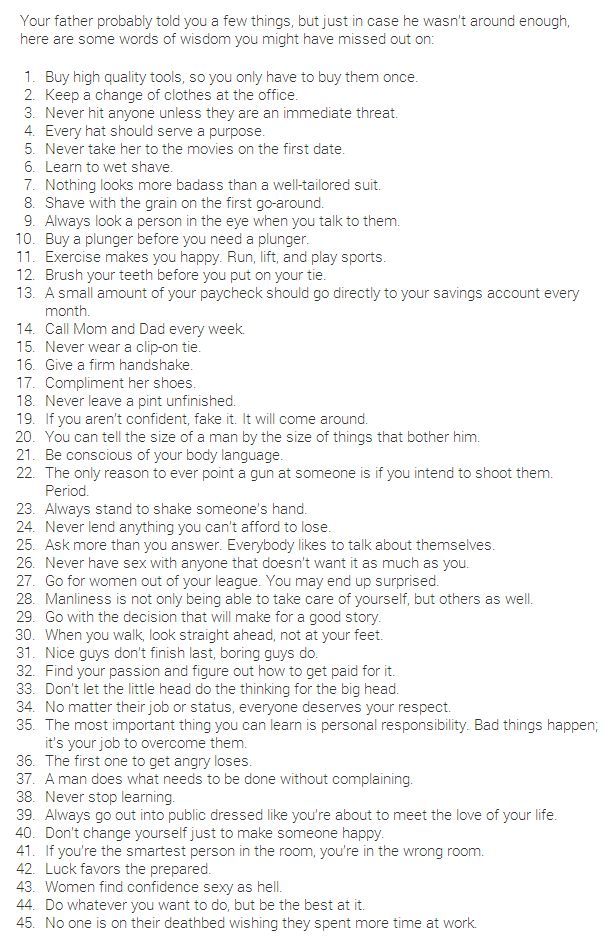
And this came to mind:


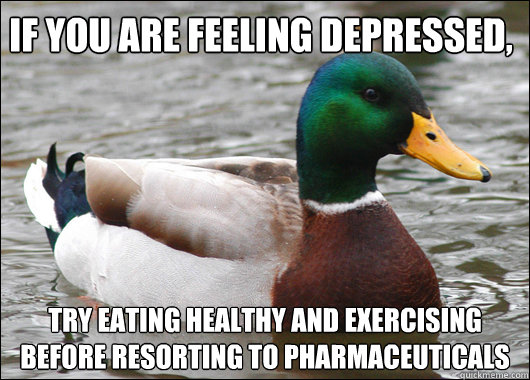
I would add "grooming" to the list of eating and exercising; you feel better about yourself when you take care of yourself and show yourself some love. You end up taking more pride about who you are (which explains why I always feel better about myself after I cut my hair).

And that's what really hit me today: the "inconvenience" of having to slow down and pay attention to what I was doing -- instead of just running an electric razor all over my face -- forced me to be more present (Peaceful Warrior reference) to, and take more care in, what I was doing.

Living on autopilot is somewhat of a habit of mine, and so anything that breaks this up is a "welcome inconvenience," if you will.

That, and I realized that wet shaving is the men's grooming equivalent of operating a straight-drive: it's just more masculine, and it's more unplugged from the Matrix of this world's artificially created realities (more on that another time).

Will I sign up for Dollar Shave Club? I don't know. In the short term, probably.

In the long term, getting a badger-hair brush and a real double-edged safety razor -- or even a straight razor -- may be somewhere down the road, but I have yet to come upon that part of the path with the One who is leading and fathering me in these unfinished places in my life...

Wednesday, January 23, 2013

Lonacy

The moon reminds us what it’s like to be lonely.

Yet the moon is never alone,
for it has the Light of the sun
     to keep it warm
in the cold emptiness of space.

But the moon also has its Idol,
for it revolves around the World.
This is why it has a Dark side
instead of being fully wrapped
     in the Arms of Light.

For if the moon revolved around the Sun,
then it would be complete;
for it would have the Companion it desires,
and all the warmth it ever needs.

* The title is pronounced “LONE-uh-see.”