Come, friends,
Roost yourselves upon My branches,
And you will find relief
From your nightmarish fancies.
Unable to find rest in this tumultuous sea
Of blankets tossing from restless sleep,
Swim a lap with Me to find your peace.
For though it is yet night,
The birds outside sing to My delight
And remind you of the coming dawn.
It will not always be this dark,
And then you’ll find that you’re not alone.
But in the mean time,
Trust that I’m still with you
As I promised that I would always be.
Follow My whispers,
And you will always find Me.
Friday, April 5, 2013


Tuesday, April 2, 2013
Some Thoughts on Shaving from Someone Who's Not a Fan of It
I'll be honest: the only reason I'm clean-shaven on my face is because I hate having facial hair more.
I hate shaving -- or, at least having to shave -- but I hate having facial hair more.
I suppose that it doesn't help that I don't have a lot of facial hair (it's not really thick). Apparently it's so sparse that, according to a good friend who has used make-up techniques to help other guys' beards seem more full, I "don't even have enough to work with," even if I wanted to grow it out.
One day, while expressing my frustration about shaving and looking for a long-term solution for my loathing of this grooming chore, a buddy of mine -- who was completely oblivious to my dilemma -- sent me the website Dollar Shave Club:
I had previously been using my electric razor every 2 days or so (I can get away without shaving for a day and no one really notices, so of course I don't shave every day).
But I was looking for something different -- not really sure what -- and here's this Whisper (Sacred Romance reference) calling me in the direction to transition to a razor and shaving cream.
Pffff.
Dismissal of the idea with a casual wave of the hand.
No way I'm going in that direction; it's more inconvenient than using my electric razor, and what I'm looking for -- now that I think about it -- is something easier.
Never mind the fact that "easy doesn't enter into adult life" (The Weatherman).
So I cut my hair last week and you would never guess what happened.
No really; go ahead and see if you can guess what happened.
I'll give you a hint: I always make sure to shave when I cut my hair.
Can't figure it out? Yeah, I wouldn't have guessed, either.
My electric razor broke.
Oh, no.
What actually happened is that the "on" button you're supposed to push in to make it slide up and turn on got "stuck" in the "3" position (the furthest spot up that activates the secondary trimmer) so that I couldn't turn it off.
I finished using it the best I could, but then I had to let it sit on the sink -- as if it were in time-out because it had done something wrong (as opposed to user-error for not following the Wild Goose) -- and let the battery run down.
It was like a kid crying because they were bad and had to sit in the corner or go to their room: it was an untenable situation and I was helpless to intervene and make things right.
My electric shaver is out of commission; he threw a pitch and pulled his shoulder.
"Give me the righty!" The coach calls to the bullpen for his relief pitcher..
Enter the good ol' low-tech Gillette shaving cream and Mach 3 sampler that I happened to have and kept stored in a box with my excess toiletries.
I've had to use it for the last week or so, and of course, as with any change, there's a sense of loss for what used to be the status quo because -- let's face it -- we get used to things how they are and we're averse to change (for the most part).
But today I realized something.
First, I wasn't ever taught how to shave. I imagine that many men today aren't. My dad kept a trimmed beard and used an electric on his neck, so I never learned how to shave from him.
Then you get to factor in the reality of me not having a lot of facial hair (I was a late bloomer and didn't really have to shave until college), and it's no surprise that I never learned how to shave.
I've had an electric razor pretty much all my life. I bought a really nice Braun during college, and it lasted for almost a decade (until it broke last week).
You ever have one of those times where you feel God prompting you on something, and then you're like, "No way"?
This was one of those times.
And then I was kicked out of the proverbial eagle's nest and forced to (learn how to) fly.
And with any change that one is forced (against their will) to accept, I pouted.
At first.
But then I realized that it's not as bad as I figured.
I'm (sort-of voluntarily) shaving (what I would now call "shaving" as opposed to just "cutting facial hair") for the first time in my life. And I'm 30.
And then I had some questions.
Why are you supposed to shave with the grain and not against it? Wouldn't that make more sense?
So I did what pretty much anyone does when they have a question: I went to the most all-knowing source I knew of.
That's right. I Googled it lol.
And I came across something that dealt with wet shaving.
I saw this term, wet shaving, on an info graphic on one of my favorite websites, I Waste So Much Time, last week as well (it's #6, although a lot of the info on there is good stuff):
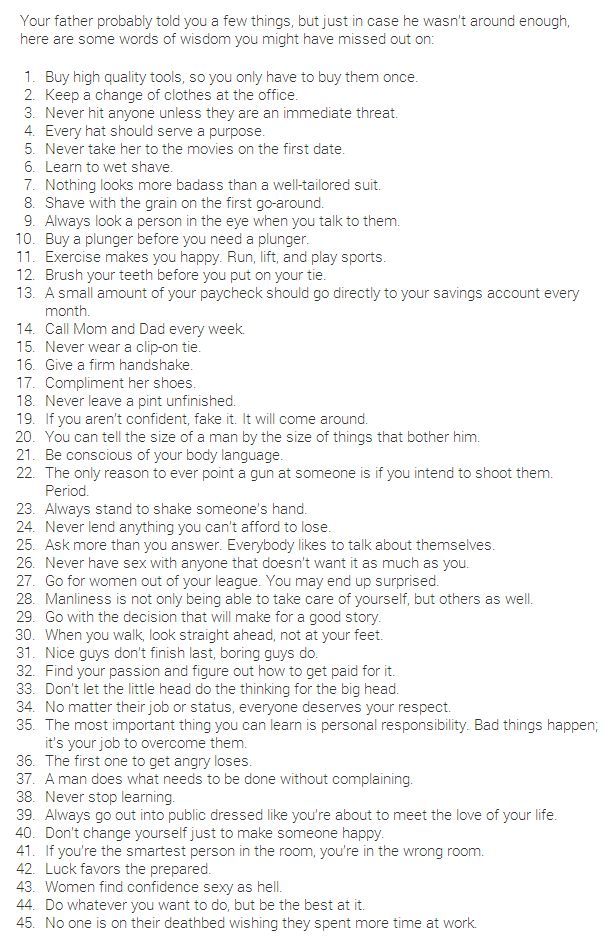
So I started looking into that. And I stumbled upon this post from Today.com about shaving.
I learned more in 10 minutes than I had in 30 years.
Because Someone was fathering me through an area of my life where I had previously been a (very unhappy) orphan -- prompting me to go in a direction that would bring me more life.
Yes, I was pushed into this, "kicking and screaming" (to quote Tyler Durden), but I'm realizing that the grass on this side of the fence is a lot greener than I thought. (Of course it is, when your Father goes before you to prepare it for you, Deuteronomy 31:8.)
Just today, I ended up cutting my hair and shaving after my shower (usually it's hair, shave, then shower).
For part of the wet shave, your facial hair has to soak up the water, which causes the hair to soften and makes it easier to cut instead of practically ripping it out of your face when it's dry.
I had to rinse my face afterward since I had already showered (the shower would normally rinse the excess shaving cream off for me).
Yes, it was inconvenient.
Yes, it took up more of my time.
But I felt so much better after a haircut and a good shave (my "whiskers" had grown out for several days).
And this came to mind:

I would add "grooming" to the list of eating and exercising; you feel better about yourself when you take care of yourself and show yourself some love. You end up taking more pride about who you are (which explains why I always feel better about myself after I cut my hair).
And that's what really hit me today: the "inconvenience" of having to slow down and pay attention to what I was doing -- instead of just running an electric razor all over my face -- forced me to be more present (Peaceful Warrior reference) to, and take more care in, what I was doing.
Living on autopilot is somewhat of a habit of mine, and so anything that breaks this up is a "welcome inconvenience," if you will.
That, and I realized that wet shaving is the men's grooming equivalent of operating a straight-drive: it's just more masculine, and it's more unplugged from the Matrix of this world's artificially created realities (more on that another time).
Will I sign up for Dollar Shave Club? I don't know. In the short term, probably.
In the long term, getting a badger-hair brush and a real double-edged safety razor -- or even a straight razor -- may be somewhere down the road, but I have yet to come upon that part of the path with the One who is leading and fathering me in these unfinished places in my life...
Wednesday, January 23, 2013
Lonacy
The moon reminds us what it’s like to be lonely.
Yet the moon is never alone,
for it has the Light of the sun
to keep it warm
in the cold emptiness of space.
But the moon also has its Idol,
for it revolves around the World.
This is why it has a Dark side
instead of being fully wrapped
in the Arms of Light.
For if the moon revolved around the Sun,
then it would be complete;
for it would have the Companion it desires,
and all the warmth it ever needs.
* The title is pronounced “LONE-uh-see.”
Yet the moon is never alone,
for it has the Light of the sun
to keep it warm
in the cold emptiness of space.
But the moon also has its Idol,
for it revolves around the World.
This is why it has a Dark side
instead of being fully wrapped
in the Arms of Light.
For if the moon revolved around the Sun,
then it would be complete;
for it would have the Companion it desires,
and all the warmth it ever needs.
* The title is pronounced “LONE-uh-see.”
Saturday, November 24, 2012
Thoughts and Reflections on Matthew 25's "Parable of the Talents" (Revised)
For those who
don’t know, Matthew 25 contains 3 major sections:
- Parable of the Ten (Wise & Foolish) Virgins (1-13)
- Parable of the Talents (14-30)
- Final Judgment / Sheep & Goats (31-46)
All, in one way or
another, deal with the final judgment and the end of time.
Taking a look at
the parable of the talents, one servant in particular is given more attention
than the others, and that’s the one who doesn’t do what he’s supposed to (and
is apparently punished accordingly).
This teaching has
been, in the past, used to manipulate people into performance-based activity versus a substance-based faith that revolves around a relationship with
our Creator and Redeemer.
The relationship
will inevitably lead to action as we open up and allow the Spirit of God to
transform us, but actions don’t automatically lead to a relationship (Matthew
7:21-23). As Ellen White wrote in Steps to Christ,
* Recall that the two most important commandments -- loving God and loving others -- both revolve around love (Mark 12:29-31).
There are those who profess
to serve God while they rely upon their own efforts to obey His law, to form a
right character, and secure salvation. Their hearts are not moved by any deep
sense of the love of Christ,* but they seek to perform the duties of the
Christian life as that which God requires of them in order to gain heaven. Such
religion is worth nothing.
When Christ dwells in the
heart, the soul will be so filled with His love -- with the joy of communion
with Him -- that it will cleave to Him; and in the contemplation of Him, self
will be forgotten. Love to Christ will be the spring of action. Those who feel
the constraining love of God do not ask how little may be given to meet the
requirements of God; they do not ask for the lowest standard, but aim at perfect
conformity to the will of their Redeemer. With earnest desire they yield all
and manifest an interest proportionate to the value of the object which they
seek.
A profession of Christ
without this deep love is mere talk, dry formality, and heavy drudgery.
* Recall that the two most important commandments -- loving God and loving others -- both revolve around love (Mark 12:29-31).
In verse 24, the
master is described (by the servant) as harsh and a gatherer of fruit he didn't
plant (NLT); as having high standards, hating careless ways, demanding the best,
and making no allowances for error (MSG); a hard man and reaping where he has
not sown (NKJV).
The thing that’s
tossed around about this is that it’s understood that God is fair and just, but
harsh and a cheat? He can seem like he's not making the best decision on our
behalf, but that's just about always because we're not seeing things from the
Larger Story (biblical perspective) point of view. The Message has its merits,
but not so much when it says “making no allowances for error” – because,
obviously, that's not true.
So the thing on
this is that most people get how God is a master on the relational scale (since
we are the servants), but they don’t usually see how this captures his true
nature in relating to us long-term.
When I spoke at my
church last year about the Beautiful OutlawCast – a simulcast that addressed
the personality of Jesus – the scripture that the Holy Spirit brought to my
mind the night before was Luke 19:21-22. This is when the servant who believed
that his master was an “austere” man gives an account. He was fearful of his
master; the Greek word (Strong's #G5399) means when someone is put to flight because of being terrified (reminds
me of Adam hiding from God in the Garden, “I was naked – read: vulnerable – and I was afraid because
of my vulnerability, which is why I hid”).
The servant didn’t
really know the master, and so the
master is, in a way, being portrayed as something he is not. And to be honest,
I can’t really blame how the master acted, being falsely accused – and by a
subordinate at that! No one likes to be misunderstood, and God is no exception
to that rule (Jeremiah 9:23-24).
Yes, there are
some things that we get to question and prod to find out answers to:
More important than what you ask, though, is how you ask.
However, there are other things that you simply don’t get to question God about:
However, there are other things that you simply don’t get to question God about:
“Woe to the one
who quarrels with his Maker – an earthenware vessel among the vessels of earth!
Will the clay say to the potter, ‘What are you doing?’ Or the thing you are
making say, ‘He has no hands’?” ~ Isaiah 45:9
We humans have a
tendency to get too big for our britches,
as the saying goes. In other words, we forget our place in life and demand too
much of those who, in reality, owe us nothing (*cough* God *cough*):
Then we come to
Matthew 25:26, where the master – who we can easily infer is symbolic of God –
calls the servant wicked and lazy...
Most people get
that that might be the truth in being lazy and acting out of wickedness for some people (e.g., the wicked at the final judgment), but when it's used in
comparison to how God views us (those who have professed faith in Christ) and
what we're primarily used for? That's
a bit sketchy. From that point of view, it's basically teaching that that's how
God sees us when we mess up and that we don't get second chances.
This is why we
learn self-fulfilling prophecy in
psychology: you believe something, and then you behave in a way that makes it
come true, thus (further) confirming your beliefs. Case in point, check out the
following clip (0:00-0:46):
The master was not
austere; he was generous according to their abilities. This 1-talent servant
freaked out with only 1 talent; how do you think he would’ve responded if his
master had given him 10?! His master would’ve been ten times as pissed for the misuse
of ten times the ability, so giving this servant only
a little was actually a compassionate – read: loving – action because he had less
to be judged for. The master was fully aware of what the servant could handle
and didn’t give any him more than he could bear.
Matthew 25:19 says
that it was “a long time” before the master returned. Fear wasn’t just a
one-time response for this servant; it
was a way of life, and the fearful do not inherit the kingdom.
I didn’t realize that particular point until John Eldredge pointed it out in Revelation 21:8 -- and notice who gets mentioned first! (Hint: it’s the fearful.)
I didn’t realize that particular point until John Eldredge pointed it out in Revelation 21:8 -- and notice who gets mentioned first! (Hint: it’s the fearful.)
I had a bumper
sticker one time that said, “God sends no one to hell; those who ignore Jesus
send themselves there.” Keep in mind that the master was generous to those who
were loyal to him (2 Chronicles 16:9a); the servant who was loyal to his fear elicited that particular reaction from his master. The master didn’t want to be like that, just like a father
doesn’t want to have to discipline
his children, but sometimes it has to happen because of the love the father has
for his children. And for a God who is
Love, every action of his is always
founded on his nature, which is love:
The story is
almost told from the perspective of each servant. The fearful servant also
didn’t truly know his lord because “perfect
love casts out fear” (1 John 4:18). Again, this whole thing is about relationship, not just obedience (reference Matthew 7:21-23).
This is one of the
things I’ve really appreciated about the TV show, Once
Upon A Time, because you can see how transformative love is in people’s lives:
- Rumplestiltskin opens up to Belle in order to express himself in a moment of emotional vulnerability;
- Charming defends Ruby (the werewolf) in the midst of an insurrection lead by his former enemy;
- Emma realizes how much her parents cared for her by sending her away when she sees the nursery that they had set up for her and the broken dreams that it represented;
- Regina (the evil queen), out of love for Henry, is able to get along with the husband of her long-time enemy and, out of love for Daniel, finally lets him go because you can’t force a true relationship (reference Proverbs 18:19).
This servant
didn’t let the love and grace of God open up and transform him, and so he never
established a relationship with his Maker that had any substance to it –
meaning that he didn’t truly know his
master, which is what God wants from us, anyway (John 17:3).
Okay, so, some
people understand that we have certain things we need to take care of and are
appointed to do as followers of God. But what does this teach when we're basing
that idea on a “one time does it” mentality kinda story like this? I mean,
this is talking about the final judgment. So, yes, God is fair, but how does
this capture his heart if it's taught with such a binding “works” mentality?
I’ll reference the
point I made above about the fact that this
servant had made a lifestyle out of living by fear. “Contempt” is one of
the responses that are given to the wicked (Daniel 12:2). The Hebrew word
(Strong's #H1860) is used twice in the Old Testament and translated “abhorring” or “contempt,” both of which
imply something that is repulsive (“lukewarm” comes to mind, Revelation
3:15-16). Contempt is an emotion felt toward
someone, and although God will invariably love
every single person who has ever lived, who could blame him for being
broken-hearted toward those who have continually spurned his wooing heart?
By the way, it’s
only those who we love that can break
our hearts in this way, and God is no different since we are made in his image.
This is something that I realized about Jesus and Judas a while back:
Any one of us,
knowing that Judas would betray us, would act in a way that would bring about
that betrayal (self-fulfilling prophecy, anyone?). We would be callous toward
him, dismissive, bitter, etc., and he would be justified in harboring feelings of
resentment that would lead to betraying us.
But love, by
definition, does not do that. It is
patient, tender, humble, selfless, “keeps no record of being wronged,” “never
gives up, never loses faith, is always hopeful, and endures through every
circumstance” (reference 1 Corinthians 13:4-7).
Jesus, because of
his loving nature, could not and would not and did not ever give up on trying to win Judas’ heart. He was
vulnerable with Judas, fully expressing the heart of God, “not willing that any
should perish” (2 Peter 3:9). As John Eldredge wrote of God in Wild at Heart,
God's relationship with
us and with our world is just that: a relationship. As with every relationship,
there's a certain amount of unpredictability, and the ever-present likelihood
that you'll get hurt. The ultimate risk anyone ever takes is to love, for as
C.S. Lewis says, "Love anything and your heart will be wrung and possibly
broken. If you want to make sure of keeping it intact, you must give it to no
one, not even an animal."
But God does give [his heart to us] -- again and again and
again -- until he is literally bleeding from it all. God's willingness to risk
is just astounding -- far beyond what any of us would do, were we in his
position.
Which means that
the consequences of Judas’ actions – his betrayal of Jesus – fall squarely on his
own shoulders.
The Holy Spirit is
no different with each of our own hearts, as Jehovah spoke of ancient Israel:
Now I will sing for the one I love
a song about his vineyard:
My beloved had a vineyard
on a rich and fertile hill.
He plowed the land, cleared its stones,
and planted it with the best vines.
In the middle he built a watchtower
and carved a winepress in the nearby rocks.
Then he waited for a harvest of sweet
grapes,
but the grapes that grew were bitter.
Now, you people of Jerusalem and Judah,
you judge between me and my vineyard.
What more could I have done for my vineyard
that I have not already
done?
When I expected sweet grapes,
why did my vineyard give me bitter grapes?
(Isaiah 5:1-4)
God does
everything that he possibly can in wooing and winning our hearts that does not
violate our own free will:
To force himself
on us would be the equivalent of spiritual rape and would be appalling to the
utmost degree imaginable. Could you imagine any judge or jury returning with a
“not guilty” verdict for a husband who forced himself onto his wife -- repeatedly -- against her
will? Even though it’s morally lawful for them to have sex because they're married, if he forces it against
her will, it’s still rape – which would then make it unlawful.
So for Judas – as
well as this servant – to continue to resist God’s gentle-yet-persistent
beckonings is going to invariably leave God hurt.
Despite our love for someone, which one of us
wouldn’t feel some contempt toward a person who broke our heart?
DISCLAIMER:
Contempt does not mean unforgiveness.
In the strictly literal sense, yes,
the wicked at the end of time are
unforgiven – because they did not accept Jesus’ atoning sacrifice – but they
are also still deeply loved by their
Creator. More on that thought in this post.
It probably
wouldn’t be a stretch to imagine this guy as a fence-rider, either, never really
leaning one way or the other (again, the “lukewarm” issue surfaces).
Don’t get me
wrong, Jesus gets pissed at people,
but it’s typically the people who know
what they are supposed to do and then don’t do it; these are presumably the
people who would have the best chance of truly knowing God (reference John 5:39).
He also has a
compassionate side, though. Matthew 12:20 says “a bruised reed shall he not
break.” He’s tender with the broken, the wounded, etc. He was always looking to
mend hearts in addition to people’s physical frailties.
“But if you had
known what this means – ‘I will have mercy, and not sacrifice’ – you would not
have condemned the guiltless.” ~ Matthew 12:7
There’s no way I’m
going to presume that I know how God judges people, because I don’t. But it’s
like the whole faith-versus-works thing – there’s evidence for both sides, and there
is no way we’re figuring out how much
God is "made up" of each one. There’s mystery here, that’s for sure.
“Paradox: Life’s a
mystery. Don’t bother trying to figure it out.” ~ Peaceful Warrior
Yes, obey God in
feeding the hungry, etc., etc. But God doesn't hate you and immediately toss
you to the side or into a dark pit where there's gnashing of teeth (Hell, most
people would assume).
Some can
have a real issue with how people portray God in this strict comparison
with the master. But Jesus explains that God is going to deal fairly with it.
Which, yeah, he is. But it’s easy to think that the master in the story was a
bit extreme – and that can have
devastating effects in how people view their lives.
I remember reading
about when "Samuel" appeared to Saul in the Old Testament after being summoned by
a medium (which, by the way, attempting to communicate with the dead is/was strictly forbidden, Deuteronomy 18:9-12).
- The Mistake (1 Samuel 28:7-11). Saul consults with a medium.
- The Misperception (1 Samuel 28:14). Notice that the scriptures do not say that it was Samuel, but that Saul perceived that it was Samuel. If angels can disguise themselves as people (Hebrews 13:2), then it's not too much of a stretch to say that fallen angels can imitate people, too.
- The Message (1 Samuel 28:19-20). “Moreover” in verse 20. In other words, “Above and beyond the news I have already given you, here’s some more bad news.” Notice Saul’s reaction: “then Saul... was sore afraid because of the words of Samuel.”
- The Murder (1 Samuel 31:4, 1 Chronicles 10:13-14). As if I needed to go further, it is written that God specifically killed Saul for his consultation with the medium.
Notice that in 1
Chronicles, the text explicitly says that Saul didn’t approach God about it, but
that he went to a woman who had a familiar spirit; would I be presumptuous to say that God desired for Saul to seek the answer from Himself? But no, Saul
wouldn’t humble himself and take a chance with God (Micah 6:8), so he played it safe and
consulted what he thought was a safe bet...
It’s usually the heart-level
issues that are important.
Too much emphasis on obedience focuses on the symptom (e.g., inaction), similar to the “check engine” light on a car. Just don’t forget to take a good look under the hood – read, under the surface – every once in a while...
Too much emphasis on obedience focuses on the symptom (e.g., inaction), similar to the “check engine” light on a car. Just don’t forget to take a good look under the hood – read, under the surface – every once in a while...
God’s heart is for
us to repent, to turn ourselves back toward him and away from our selfish ways of
handling life (Ezekiel 18:31-32). Satan would give a message that is intended
to rob us of hope and for us to give in to despair, which is exactly what
happened to Saul.
“God has not given
us a spirit of fear, but of power, and of love...” ~ 2 Timothy
1:7
“There is no
fear in love; but perfect love casts out fear...” ~ 1 John 4:18
Again, recall that
this servant made his fear of his master a lifestyle
that he lived out for a considerable period of time. He didn’t truly know his master, which means that his perception of his master was false,
but that his false perspective caused a (falsely perceived) reality to occur that confirmed his misperception.
Bottom line:
Get
to know God.
Allow his love to fill and transform you.
And then take your filled
and transformed self and get ‘er done.
Subscribe to:
Posts (Atom)